
Your doors just
got smarter
Door Cloud is a comprehensive cloud-based access control solution featuring alarm management, visitor management, incident management, emergency management and more. It makes your doors smarter by seamlessly combining major mobile and card-based access methods.

Mobile first
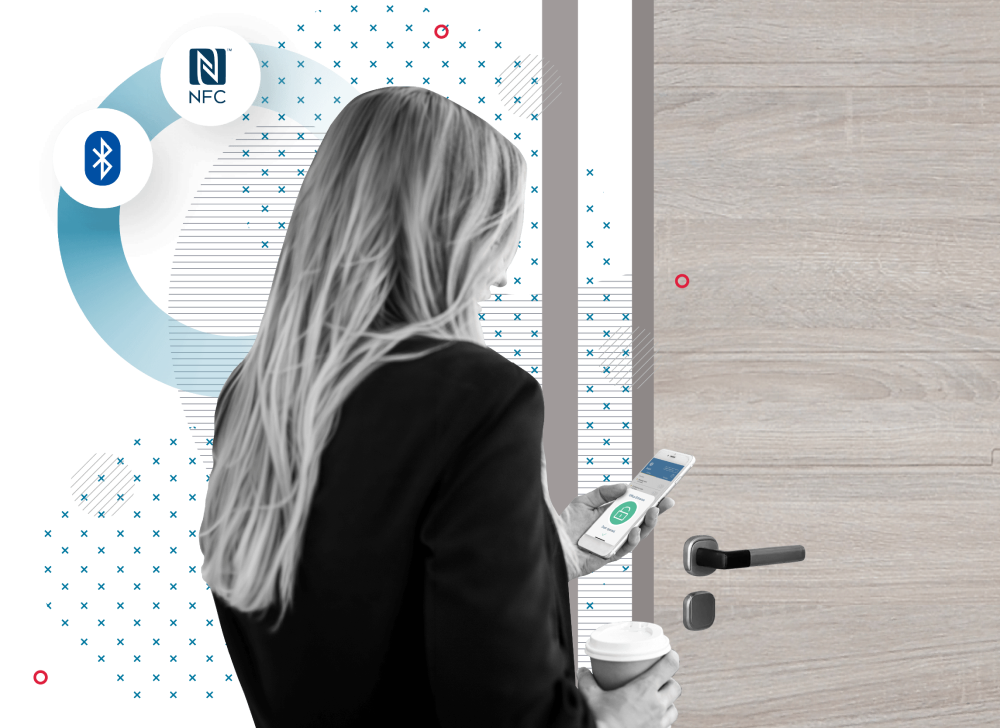
The trend is clear, cards are gradually being replaced by mobile phones. Door Cloud has been designed for smooth transition as non-disruptive, yet mobile-first solution.
So you can have mobile and card access at the same time, mixed freely. For example, you can start with existing cards and gradually depart from them. Or keep them for some doors or for some people. Whatever is your card strategy, Door Cloud mobile app allows you to open any door from anywhere!


Wide lock compatibility
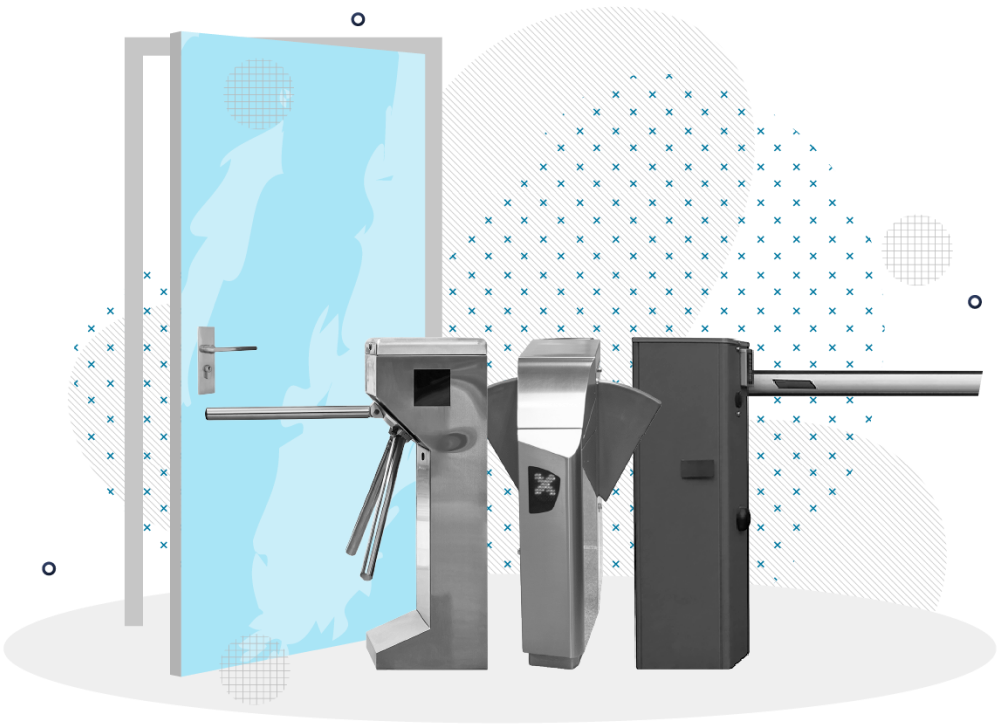
Door Cloud access control works with standard electric locks and does not require any specific »smart lock«. Any lock that can be controlled with an electric pulse can be used, which makes it compatible with generic door strikes, maglocks, a wide range of barriers, ramps, gates, etc.
Particularly the ability to use door strikes instead of anything door-mounted brings many advantages, such as:
- Wired power eliminates battery-related worries.
- Wired lock control is more stable and reliable than WiFi or Bluetooth.
- Door control can be used simultaneously with intercom or other door entry systems.
- The locking mechanism is placed in the door frame making the installation stationary and more solid.
- They can be combined with existing door-mounted locks.
- They are familiar and widely used for intercom-controlled door entry.
- Door strikes are available in any local hardware store and relatively cheap.
Key link
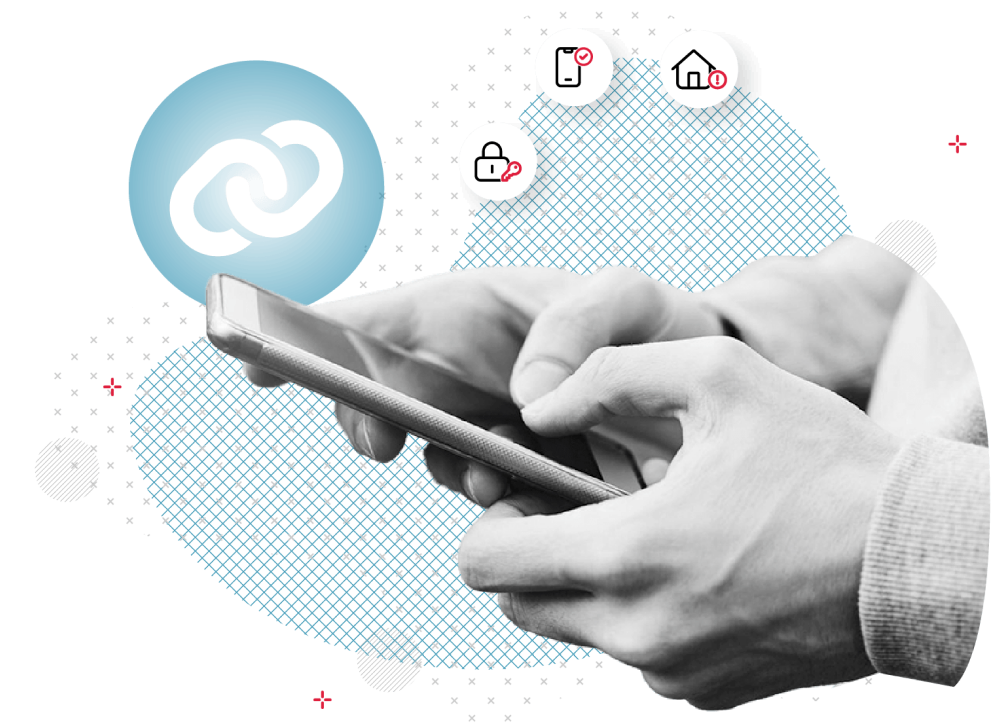
Door Cloud users can grant access by simply sending a Key link. Because the Key link is a standard web link, it does not require an app and can be used by anyone with a smartphone and internet connection directly from the browser.
No app or registration is needed, which makes it extremely useful in situations such as apartment rent, for inviting guests or for visitor management.

Wireless locks
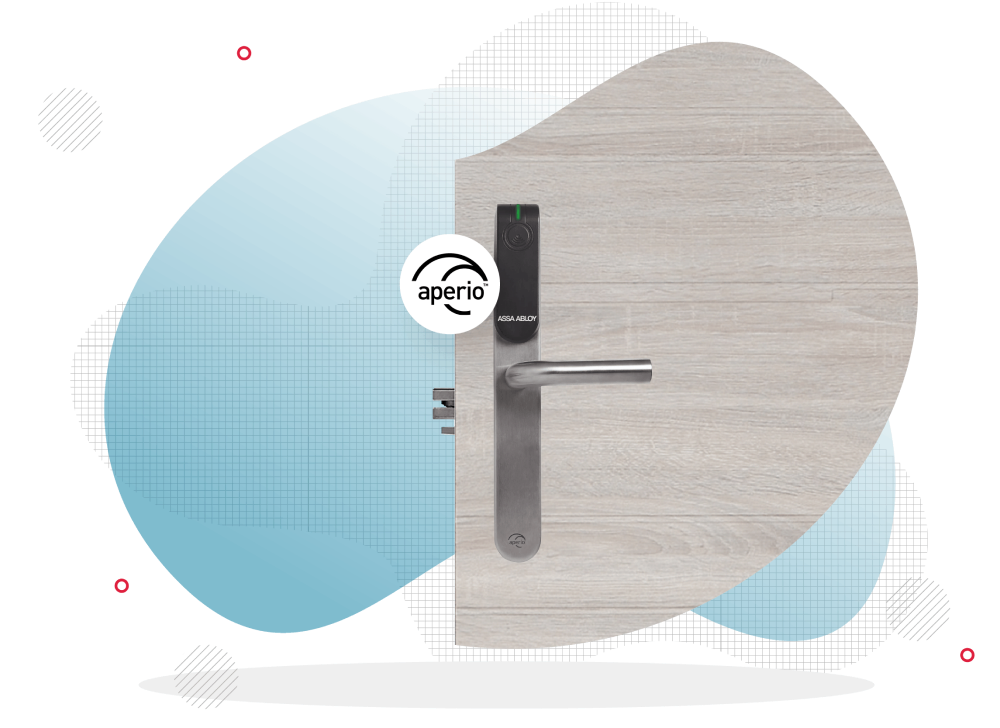
In addition to generic door strikes or any other wired electric locks, Door Cloud can be used with Aperio wireless locks from Assa Abloy. Aperio locks can be opened either with cards or with the mobile phone using the Door Cloud mobile app. Aperio and door strike locks can be freely combined.
Aperio wireless hubs are connected via Zone Wing controller thus ensuring continuous operation in the event of internet outage.
Go readerless
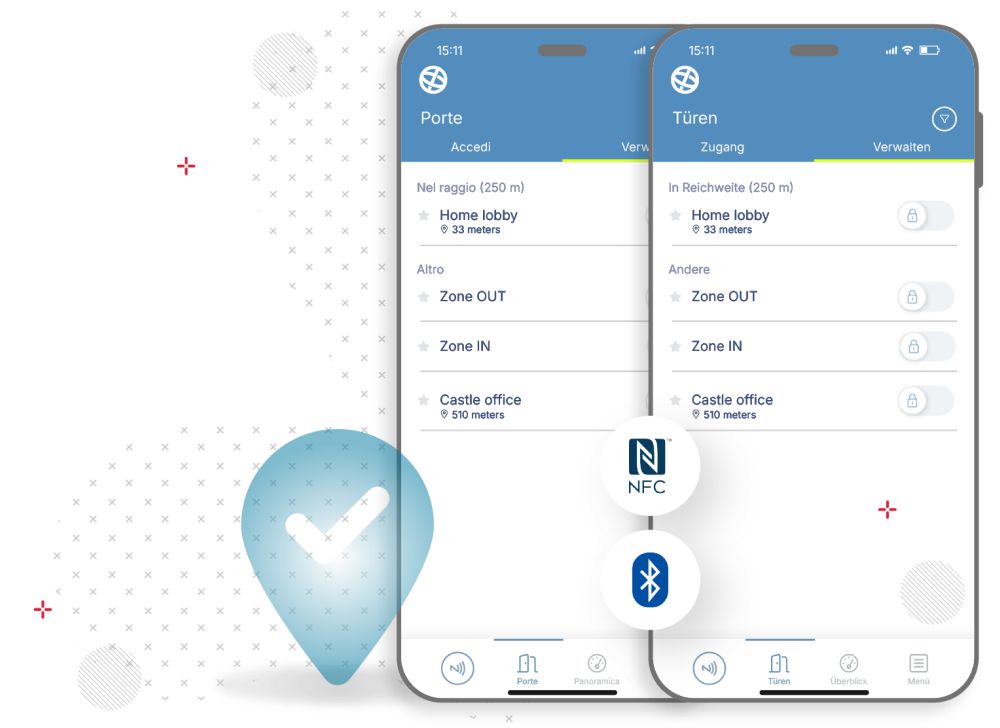
Thanks to advanced online and offline features of Door Cloud, card readers can be eliminated at some or even all access points. Instead of using cards for identification, the user is then identified with the mobile phone.
Normally, Door Cloud mobile app and door controller talk to each other online. If either of them falls offline, they automatically switch to Bluetooth communication, without the need for special readers. Readerless access can be used in combination with readers and cards on any door, for any user and at any time.
Or not
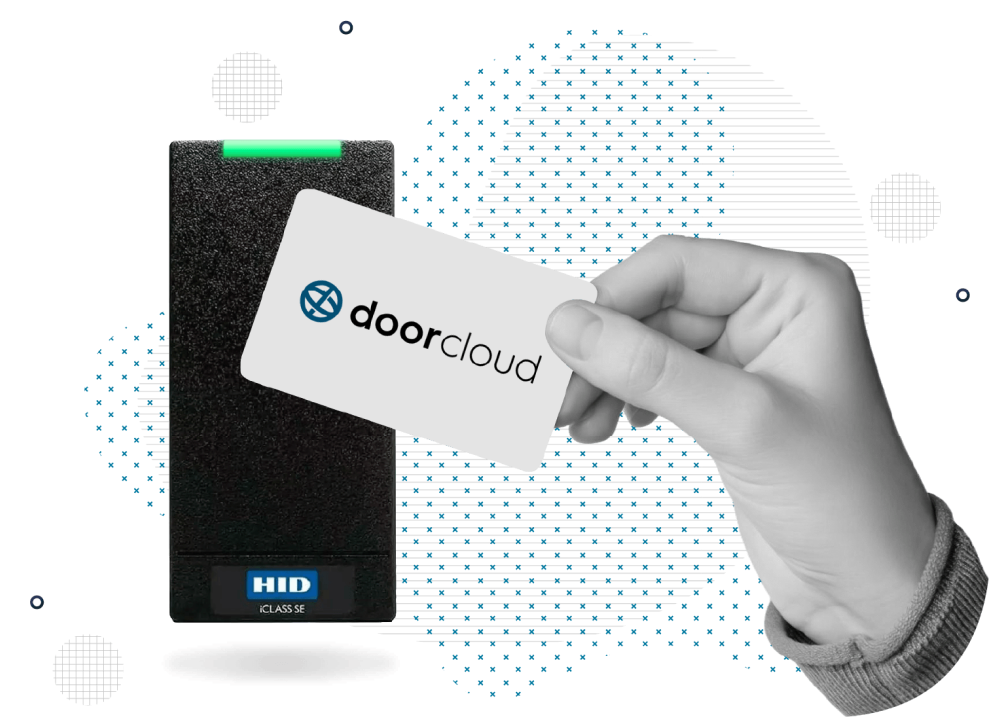
If cards are still required for any reason, card readers are also supported. Door Cloud allows both cards and smartphones to be used on any door.
Mifare, iClass, NFC and other popular RFID formats are supported by connecting HID or compatible readers. Classic Wiegand, DataClock and more advanced OSDP connection standards are supported. Biometric readers that emulate standard reader interfaces can also be used.
Latest readers offering HID Mobile Access are also supported, offering yet another possibility for replacing cards with smartphones.
Controllers
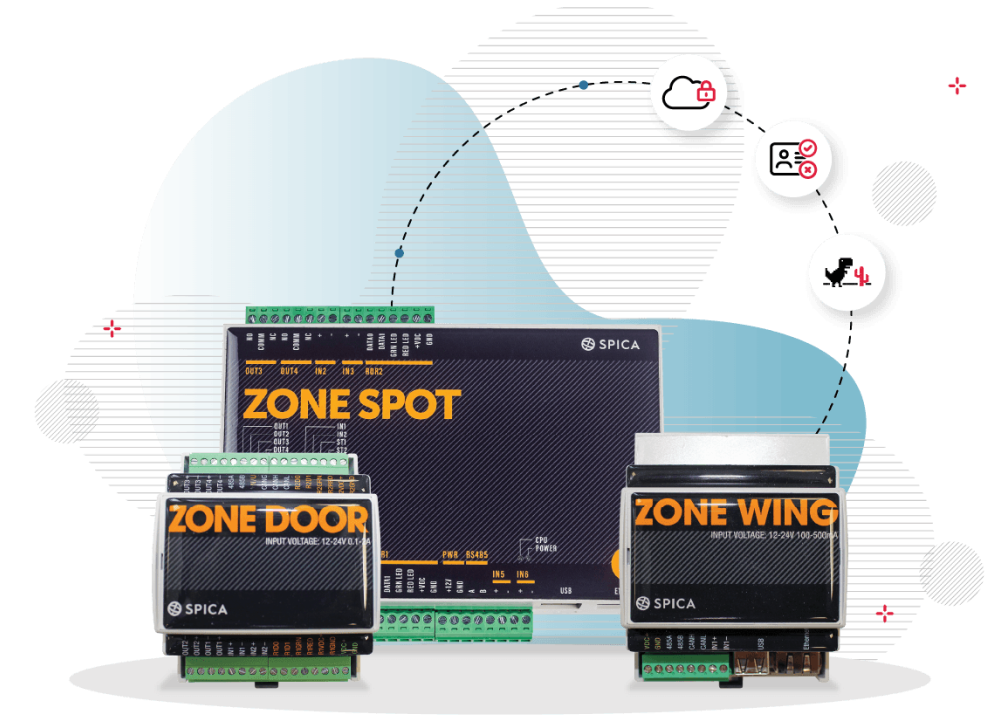
Zone Access controllers have been designed by Spica specifically for cloud communication to ensure safe and secure management over the internet. In case of internet dropouts, a number of offline features provide uninterrupted operation.
Zone Spot is dual door controller with built-in I/O for 2 card readers, 4 door locks and 4 multi-purpose inputs. In cases where structured networking is more adequate, Zone Wing hub and satellite Zone Door I/O units can be used.
Mix and match access methods freely
Best of all, you can mix and match mobile access innovations with traditional access control features. In many cases you can even keep your existing cards and card readers.

Smartphone online

Smartphone offline

HID Mobile Access
Standard cards and readers

Standard electric strikes

Wireless locks
Visitor management
Visitor management adds important benefits to access control:
- Visits can be easier to organize, conduct and supervise in accordance to rules and regulations.
- Visits can be organized, prepared and visitors vetted in advance.
- All visits and visitors are logged and kept for the record.


Ad-hoc
Guests arrive unannounced and check-in at the reception desk. The visit is arranged and all necessary data is collected on the spot.

By invitation
Guests are invited via email, the visit is arranged and confirmed in advance, remotely. Reception desk stop is optional.
If access control is required, guests may be issued Key Links for mobile access remotely, or they can be issued visitor badges upon arrival at the reception desk.
Alarms and Incidents
In its simplest terms, access control means deciding who can go where and when. After the initial setup, once it has been set in motion, the system should more or less blend into the background. The real action begins only when something out of the ordinary happens.
Door Cloud provides fully featured alarm management system that provides adjustable response times, timeouts, prioritization, case delegation and escalation.
In addition to alarm management, Door Cloud provides platform for managing security events which can be either escalated directly from software or hardware alarms, or raised manually. Incidents as they are called, are then pushed through workflow stages and administrator levels until they are resolved.
The fast and efficient propagation and delegation of hardware, software or manually generated security events ensures that they are quickly brought to attention, properly identified and adequately responded to.
Three Tier Management

Client

Partner
Service
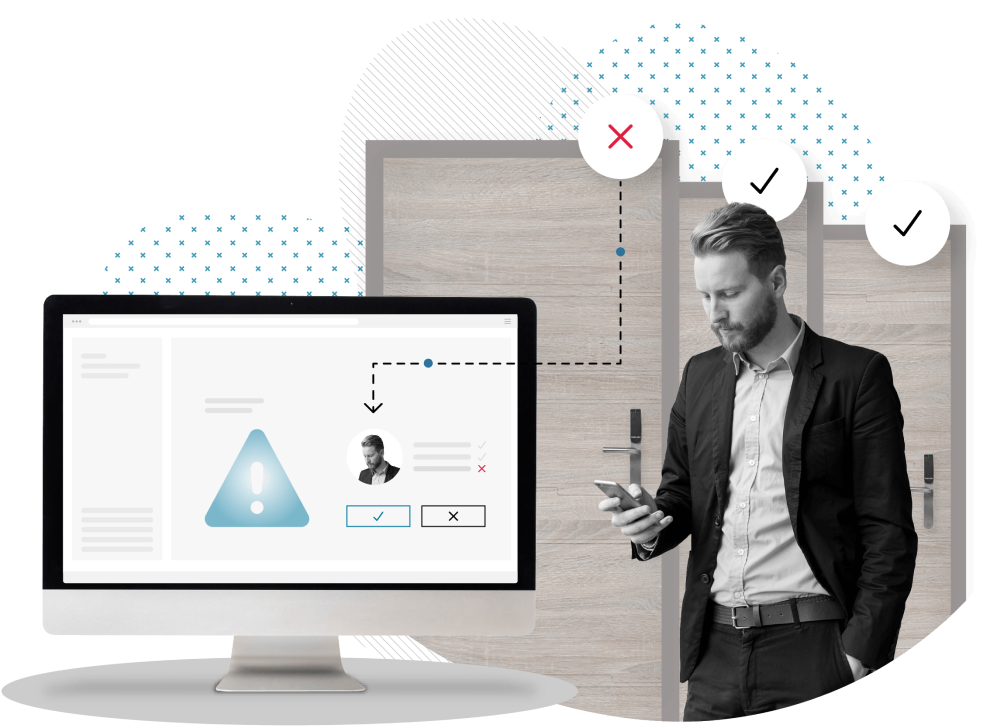
Door Cloud provides three tiers of access control management – Client, Partner and Service. That translates to four distinct roles, all of which have customizable scope and permissions that can be configured down to the individual level.
1 / End user
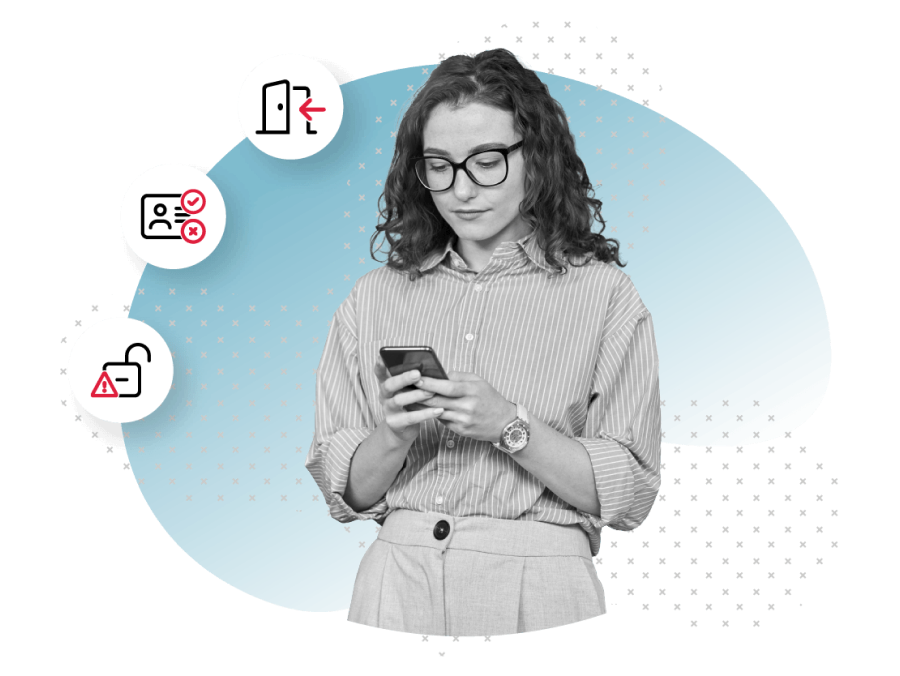
Although the user role is typically more participatory and less administrative, users can do much more than just open doors. For example, users with a smartphone can request instant access or report security-related incidents.

2 / Client Admin
The client administrator manages access control within the customer organisation. Their scope and permissions are determined according to their responsibilities and security clearance in the customer organisation.

3 / Partner Admin
The local Door Cloud partner is usually a local security company. Their admins usually manage several customer organisations. Their scope and access rights depend on how management responsibilities have been shared between the partner and a particular customer.
4 / Service Admin
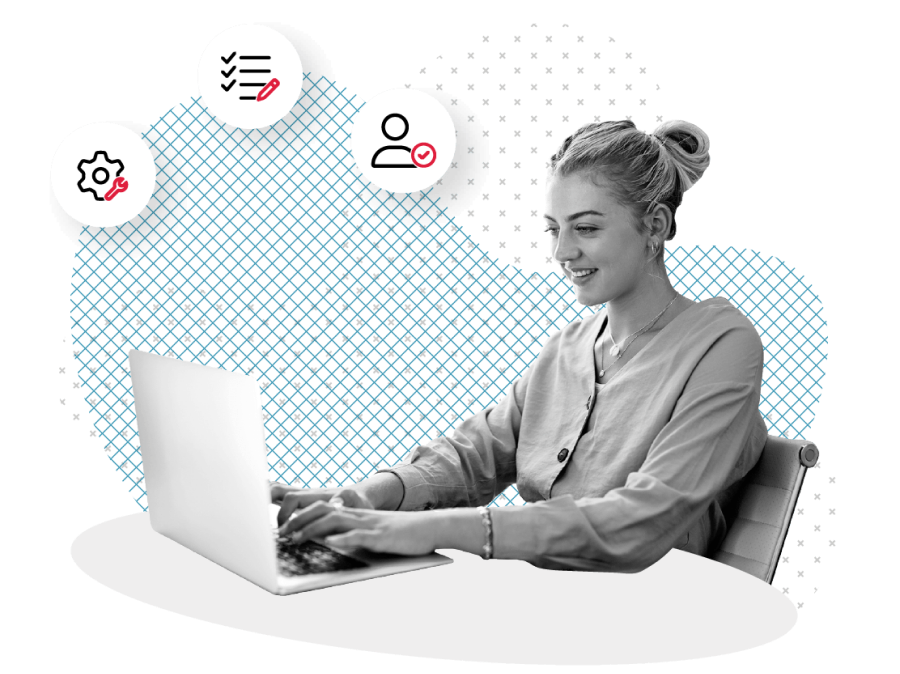
Service administrators watch over Door Cloud performance and provide support to partners, clients and users. Normally service administrators do not have operational access to customers. Master Administrators provide backup support only at the client’s explicit request or as a result of a timed-out incident escalation.
Integration API
The Door Cloud API turns Door Cloud into a powerful, open platform for the entire physical security ecosystem. It enables seamless integration with a wide range of complementary systems, including:
Time & attendance tracking

Visitor management

Video surveillance

Alarm management
Central monitoring

PSIM solutions
To meet diverse integration needs, Door Cloud offers three API plans for users and third-party developers:
Free
Included by default for basic integrations.
Pro
Advanced capabilities for professional use.
Enterprise
Comprehensive features for large-scale deployments.
Contact us


Your doors just
got smarter

All rights reserved.
Spica International
Pot k sejmiscu 33
1000 Ljubljana, Slovenia
[email protected]